The Complete Guide to Becoming A Special Forces Officer
What it really takes to lead Green Berets: the day-to-day job, the training pipeline, the pay, and the path from decision to deployment.
★★★★★4.0 · 6 reviewsby Alumigogo Books
non-fiction
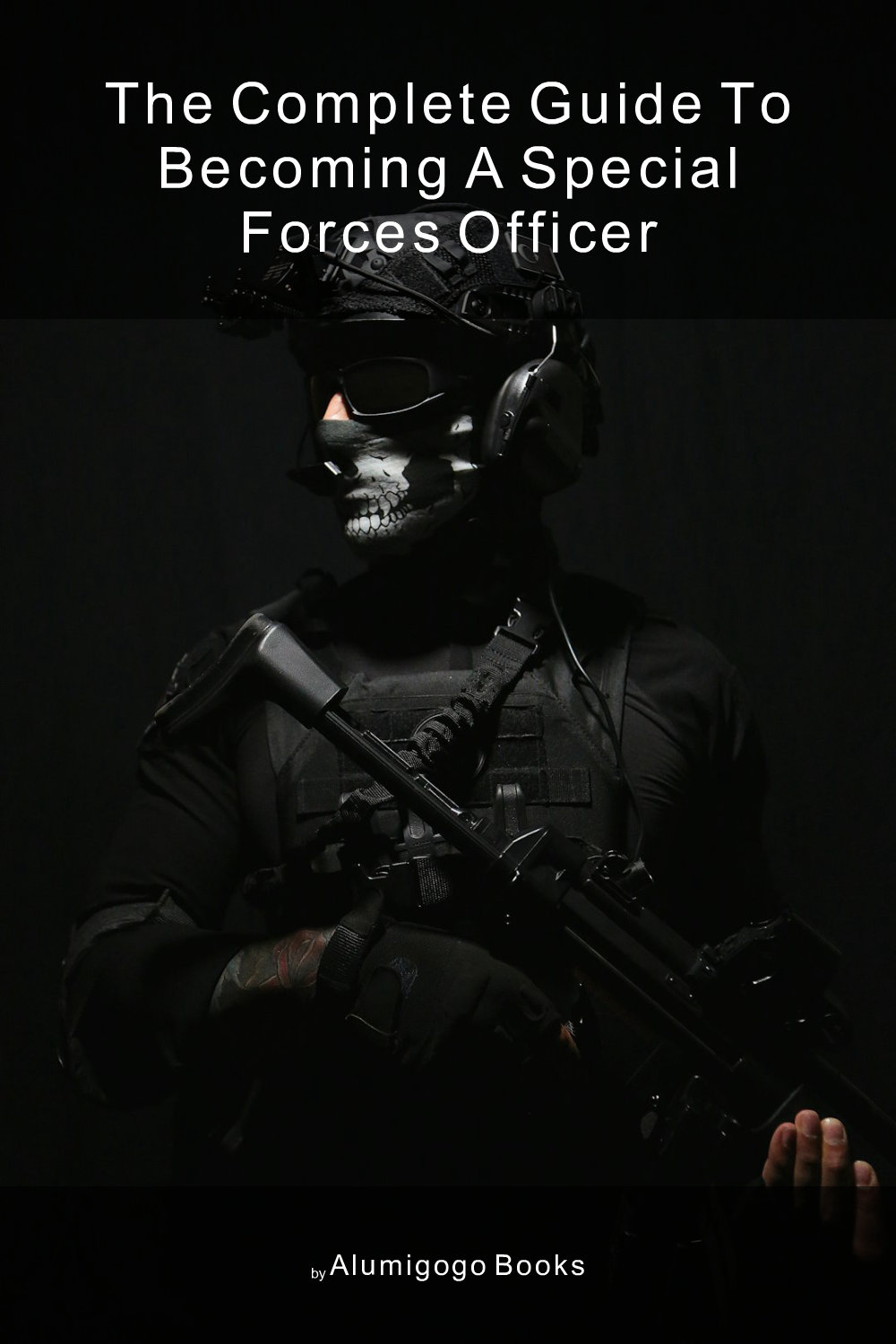
The Complete Guide to Becoming A Special Forces Officer
What it really takes to lead Green Berets: the day-to-day job, the training pipeline, the pay, and the path from decision to deployment.
★★★★★4.0 · 6 reviewsby Alumigogo Books
non-fiction
The realistic, no-nonsense guide to becoming a Special Forces Officer: pay, pipeline, daily work, and whether you have what it takes.
🔒Secure checkout via Stripe
Labor Day Sale
$9
About this book
You've seen the movies. You've heard the stories about Green Berets doing impossible things in impossible places. But what does a Special Forces Officer actually do on a Tuesday morning in Fayetteville, North Carolina, or during a six-month deployment to a country you can't name? This guide answers that question with specifics: the training pipeline (the Q Course, which runs about 12-18 months after you already finish Officer Candidate School or West Point), the pay at each rank (a new lieutenant pulls roughly $45,000-$55,000 in base pay, but with allowances and tax breaks it lands closer to $65,000-$75,000), and the actual job of a team leader, which is less about shooting and more about teaching, planning, and persuading foreign soldiers to trust you.
This isn't a recruiting brochure. It doesn't tell you to 'follow your passion' or 'unlock your potential.' Instead, it walks you through the honest trade-offs: the 12-month deployments away from family, the 40%+ attrition rate in the assessment and selection phases, the paperwork that eats 20 hours a week at garrison, and the fact that you'll spend years learning languages and cultural nuances before you ever fire a shot in anger. It also gives you the pay tables, promotion timelines, and the adjacent careers (CIA, State Department, private security, corporate leadership) that former Special Forces Officers move into.
The book is built for decision-makers, not daydreamers. You'll find self-assessment checklists, a realistic hour-by-hour breakdown of a deployment day, and a chapter on the most common questions people ask before they commit. By the end, you'll either be ready to contact a recruiter with informed questions, or relieved that you found out before signing on the dotted line. Either way, you'll know.
Reader Reviews
John Jones
★★★★★I'm a junior in college weighing ROTC vs. a civilian career, and this book answered questions I didn't even know to ask. The chapter on what you actually do day to day was eye-opening — I had no idea how much of the job is teaching and logistics rather than just combat. The pay tables were realistic, too. It didn't romanticize anything, which is exactly what I needed.
Melissa Flores
★★★★★Solid, practical book. I appreciated the honest breakdown of the Q Course attrition rate and the emphasis on language skills. It's a bit heavy on the Army-side details early on, but the self-assessment checklist in Chapter 2 alone is worth the price if you're on the fence. I'm a 28-year-old career-changer and it helped me see this isn't a job you stumble into.
Mark Anderson
★★★★★As a former enlisted soldier now considering the officer route, I was skeptical about another career guide. But this one gets the details right — from the actual daily duties to the realistic promotion timelines. The section on what senior officers actually do was a refreshing change from the typical 'leadership' platitudes. Highly recommend for anyone serious about the 18A pipeline.
Edward Brown
★★★★★The information seems accurate and well-researched, but I felt the writing was a bit dry in places. Chapter 1 spends a lot of time on the structure of the military and less on the real emotional grind of the job. I would have liked more personal stories from actual officers. Still, it's more honest than anything you'll hear from a recruiter.
Michelle Scott
★★★★★I bought this for my son who's thinking about enlisting. He found the chapter on education and training pathways particularly useful — it breaks down the difference between West Point, ROTC, and OCS without any bias. The FAQ chapter settled a few of his fears about job security and family life. It's a practical resource, not a cheerleader.
Ashley Thompson
★★★★★Decent overview, but I felt it skimmed over the mental health challenges and the toll on personal relationships. The financial part was useful, but I wanted more on the 'is it worth it' question. The author says they won't sugar-coat, but some sections felt a bit clinical. Worth a read if you're early in the decision process, but not the last word.