The Complete Guide to Becoming A Telecommunications Equipment Installer and Repairer, Except Line Installer
Real pay, real schedules, real career paths — everything you need to decide if telecom equipment installation and repair is your next move.
★★★★★5.0 · 3 reviewsby Alumigogo Books
non-fiction
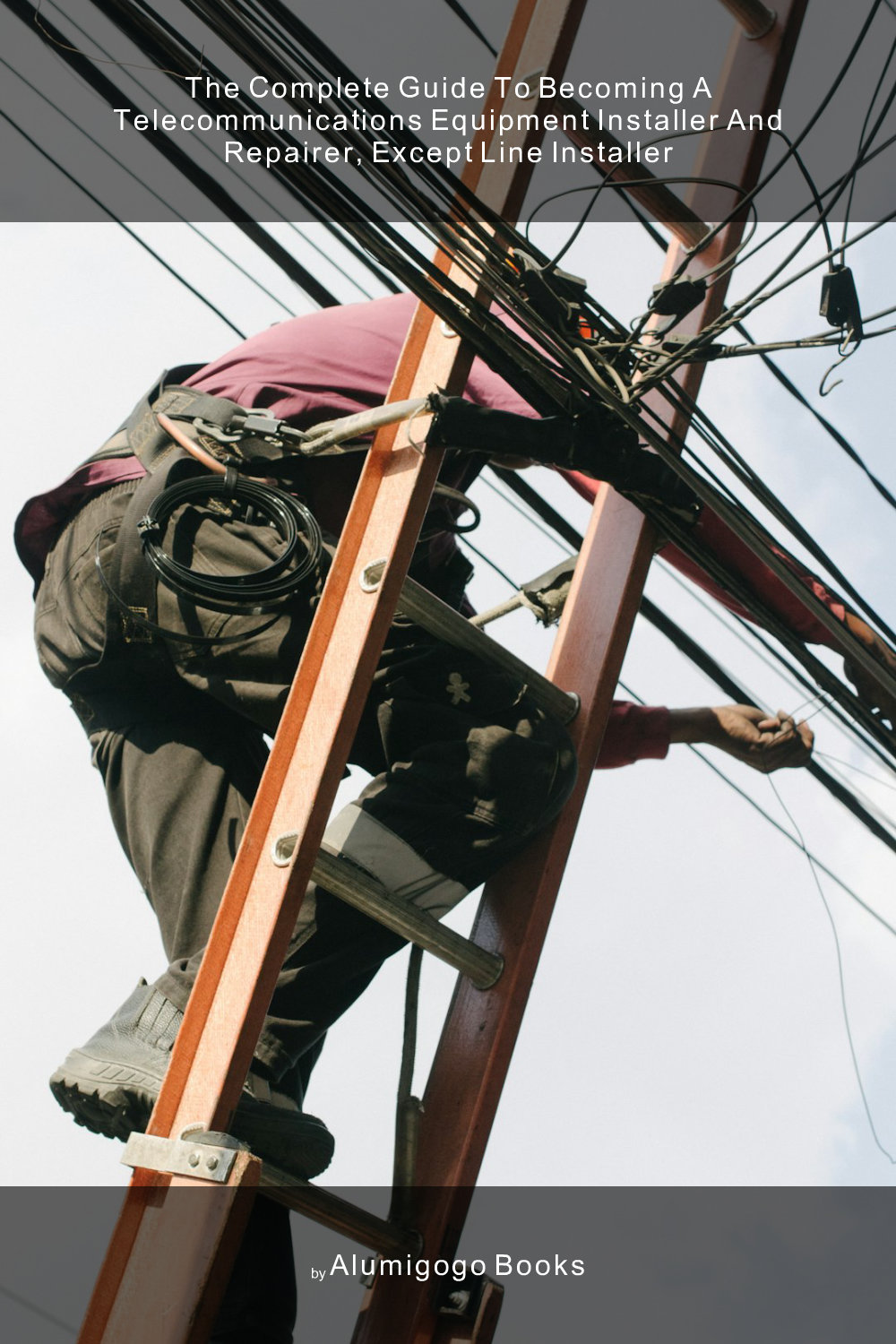
The Complete Guide to Becoming A Telecommunications Equipment Installer and Repairer, Except Line Installer
Real pay, real schedules, real career paths — everything you need to decide if telecom equipment installation and repair is your next move.
★★★★★5.0 · 3 reviewsby Alumigogo Books
non-fiction
The honest, detailed guide to becoming a telecom equipment installer and repairer — pay, path, and fit, with zero fluff.
🔒Secure checkout via Stripe
Labor Day Sale
$9
About this book
You're looking at a career that involves climbing ladders, terminating fiber, and troubleshooting gear that keeps hospitals, data centers, and entire neighborhoods connected. The job title is a mouthful — Telecommunications Equipment Installer and Repairer, Except Line Installer — but the work is specific: installing and maintaining the hardware that makes phones, internet, and private networks function. No two days look the same, but the physical demands and the technical learning curve are constants. This guide tells you exactly what you're signing up for, from the tools you'll carry to the bosses you'll answer to.
This isn't a cheerleading pamphlet. It's a working guide built for decision-makers: high schoolers weighing trade school, career-changers leaving desk jobs, and early professionals who want a trade with real growth. You'll get realistic salary ranges from entry-level (around $36,000) to senior (over $70,000), a breakdown of every certification path with actual costs and timelines, and a chapter-by-chapter look at how to break in without experience. You'll also get a self-assessment checklist so you can honestly ask yourself: can I handle 10-hour days on my feet, in a crawlspace, in July?
The telecom industry is hiring — the Bureau of Labor Statistics projects steady demand through 2032 as networks expand and existing equipment ages. But not every installer job is created equal, and not every personality is cut out for this work. This guide gives you the real questions to ask in interviews, the red flags to spot in job postings, and the adjacent careers you can pivot into later. If you're serious about this trade, start here.
Reader Reviews
Brian Hall
★★★★★I was stuck between going to a four-year college and learning a trade, and this book settled it for me. The chapter on what the job actually involves — I'm talking the real tools, the crawlspaces, the fiber termination stuff — was so specific I felt like I'd already shadowed someone for a week. The salary table made me realize I could be making $50k by my mid-20s without student debt. I'm applying to a two-year program next month.
Patricia Carter
★★★★★I've been an office manager for 11 years and I'm desperate to get out. This guide doesn't romanticize the work — it tells you flat out that your knees will hurt and you'll work outside in weird hours. But it also gave me a realistic roadmap: which certifications are actually worth the money, how to write a resume when all your experience is administrative, and what questions to ask in interviews. I feel like I'm finally making an informed choice instead of just guessing.
Gary Walker
★★★★★As a high school counselor, I've handed out plenty of career pamphlets that all look the same. This is different. The chapter on breaking in without experience is gold — my students don't have network connections or trade school backgrounds, and this lays out exactly where to apply and what to say. The self-assessment checklist is brutal but fair. I'm recommending this to any student who likes working with their hands and doesn't want a desk job.