The Complete Guide to Becoming An Occupational Therapy Aide
Know the real daily work, the actual paychecks, the training shortcuts, and whether you've got the temperament to thrive before you spend a dime on school.
★★★★★3.0 · 1 reviewby Alumigogo Books
non-fiction
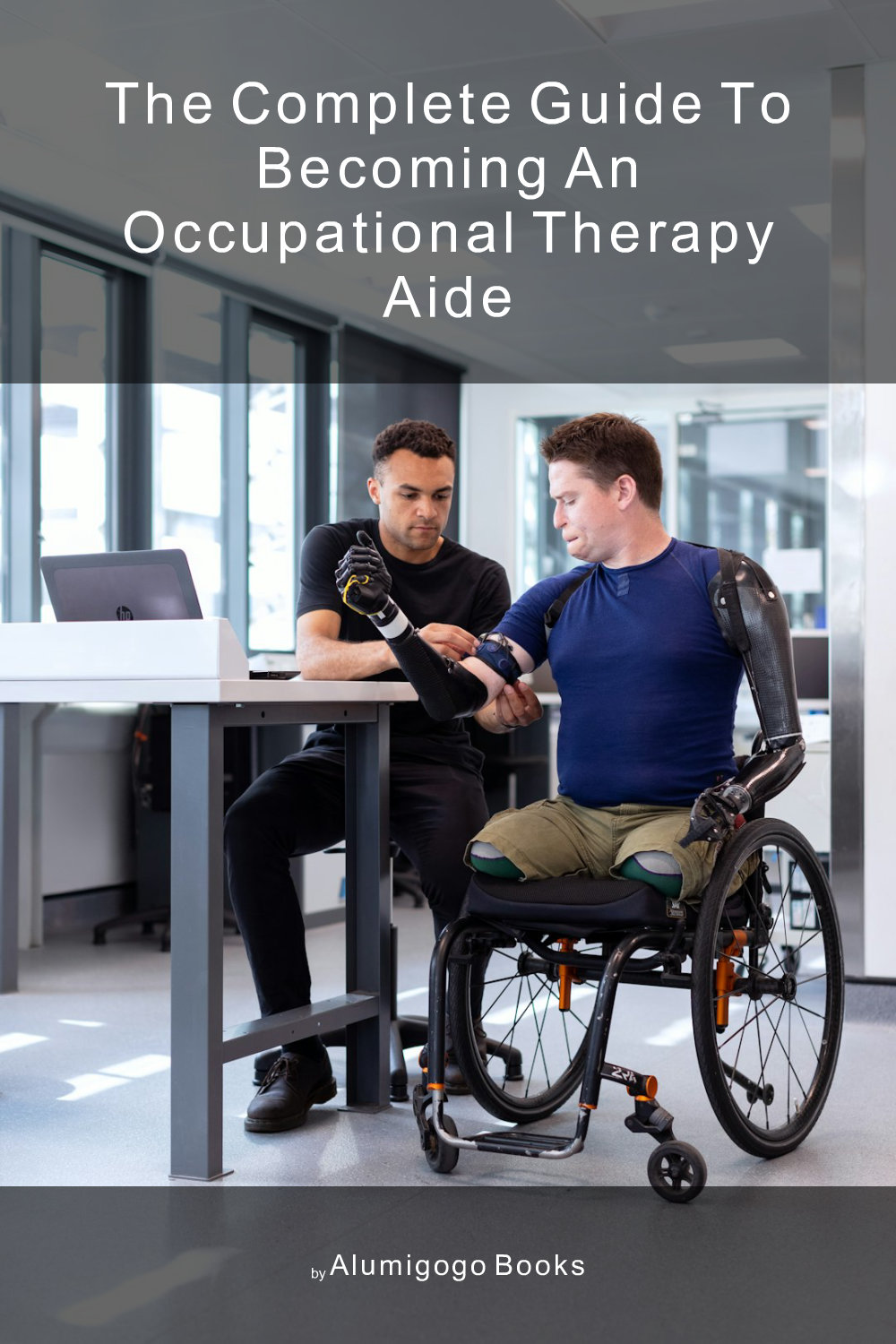
The Complete Guide to Becoming An Occupational Therapy Aide
Know the real daily work, the actual paychecks, the training shortcuts, and whether you've got the temperament to thrive before you spend a dime on school.
★★★★★3.0 · 1 reviewby Alumigogo Books
non-fiction
The honest, grounded guide to becoming an OT aide: what you'll really do, what it pays, and how to know if it's right for you.
🔒Secure checkout via Stripe
Labor Day Sale
$9
About this book
You could ask five different people and get five different descriptions of what an occupational therapy aide does. That's because the job changes with the setting — a busy hospital rehab floor feels nothing like a private pediatric clinic. But the core of the work is the same: you're the person who keeps a therapy department moving. You set up the equipment, you walk patients through exercises the therapist assigned, you document what you see, and you clean the space so the next patient can use it. It's a real job with real responsibility, and it's a common first step into healthcare for a reason: it requires almost no formal training to start, and it puts you face-to-face with patients every day.
But it's not for everyone. The pay is modest at the entry level. The work involves a lot of repetitive setup, cleanup, and standing on your feet. And you'll often be the least-trained professional in the room — you need to be comfortable following orders, not giving them. This guide walks you through all of it with concrete numbers, real scenarios, and the kind of frank career guidance you'd get from a mentor who's been there. You'll learn the exact tasks you'll be doing, the realistic salary range from year one to year ten, and which personality types burn out fast.
You don't need a crystal ball to make a good career decision. You need a clear picture of the job, the path, and the payoff. That's what this guide is for. Read it, take the self-assessment, and make the call with your eyes open.
Reader Reviews
James Davis
★★★★★I bought this because I was floundering between a few healthcare careers and needed something more real than a web search. Chapter 1 alone was worth it — it explained the job as an actual day of work, not a vague description from a poster. The pay chart in chapter 4 made me pause and realize I'd need to move up within a few years to make this worthwhile, which was the honest push I needed. It's not a rah-rah book, and that's why I trusted it. I docked one star because I do wish there were more examples of private clinic work versus hospital work, but overall a solid reality check before I commit to a CNA program instead.