The Complete Handbook of Fish Sauce
A practical reference for professionals, businesses, and serious cooks
★★★★★4.1 · 7 reviewsby Alumigogo Books
non-fiction
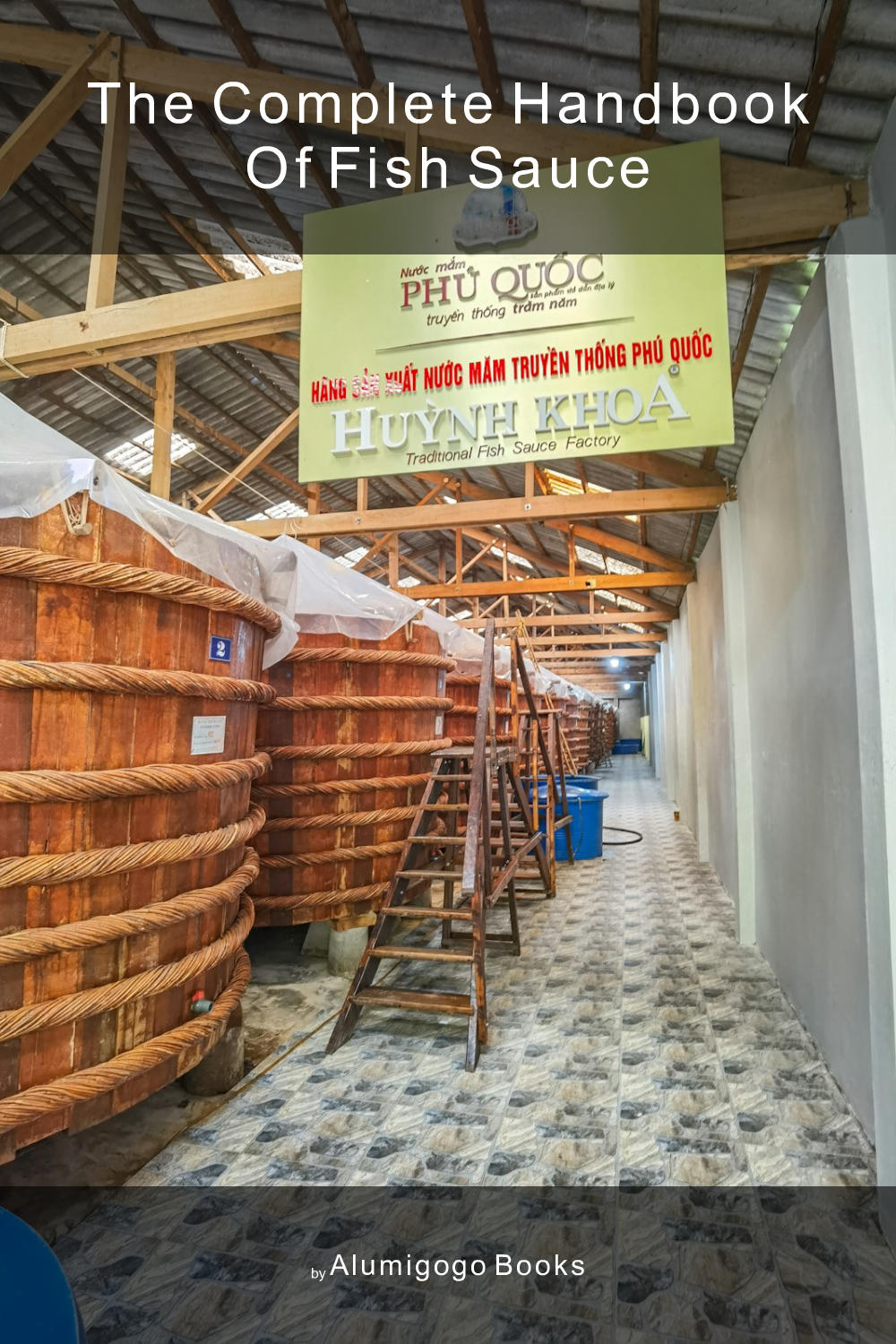
The Complete Handbook of Fish Sauce
A practical reference for professionals, businesses, and serious cooks
★★★★★4.1 · 7 reviewsby Alumigogo Books
non-fiction
From anchovy to bottle: specifications, grading, blind tasting, storage, troubleshooting, and the business of fish sauce.
🔒Secure checkout via Stripe
Labor Day Sale
$9
About this book
Fish sauce is more than the dark liquid in the back of the pantry. It is a fermented protein product with a centuries-long history, a highly variable chemical profile, and a supply chain that spans small Vietnamese island operations and large Thai industrial facilities. This handbook treats fish sauce as a serious ingredient with measurable specifications: protein content, salt concentration, histamine levels, nitrogen fractions, and pH. You will learn how to read a label for what matters, how to run a triangle test with your kitchen team, and why a $3 bottle and a $30 bottle sometimes belong in the same kitchen for different jobs.
For buyers and business operators, the book provides a framework for qualifying suppliers, understanding cost structures (anchovy grade, fermentation time, pressed vs. extracted yield), and negotiating with spec sheets, not anecdotes. It covers the licensing and regulatory landscape for importing and reselling in North America and the EU, including FDA and EFSA labeling requirements, and walks through the economics of private labeling, white-label production, and regional distribution. For the serious home cook, it demystifies the difference between nước mắm, nam pla, and patis, and explains how to store an opened bottle so it stays true for months, not weeks.
With troubleshooting tables, a glossary of trade terms, and a chapter on where the category is heading (low-sodium fermentation, traceability, and NIR scanning), this is the book to keep on the desk of anyone who buys or sells fish sauce for a living.
Reader Reviews
Brian Hill
★★★★★Solid reference book. The chapter on specifications finally explained the protein and nitrogen numbers on Vietnamese labels that I'd been ignoring for years. I dock one star because the section on choosing a fish sauce for specific dishes assumes a fairly commercial kitchen setup - for a solo private chef, some of the buying guidance assumes larger volumes than I need.
Anthony King
★★★★★I import specialty Asian ingredients and thought I knew fish sauce. This book corrected me on a few points, especially regarding how industrial producers use enzymes to speed up fermentation versus traditional natural fermentation. The business chapter is realistic about margins and doesn't promise the moon. The maintenance chapter felt a bit light for my use case, so four stars.
Rebecca Sanchez
★★★★★The tasting protocol in Chapter 3 is worth the price alone. I used it with my kitchen staff to evaluate five different brands blind and we found exactly what the book said we would - the lower-priced commercial sauces are saltier and less complex but actually worked better in braised dishes. Well organized, no fluff. I just wish the maintenance chapter had more detail on handling high-volume daily use.
Amy Thompson
★★★★★As a food science student, I appreciated the grounding in fermentation chemistry without diving so deep that it becomes unreadable. The comparison of Vietnam's traditional fermentation time versus modern accelerated methods is well done. The book avoids the usual romanticism about 'single-origin' fish sauce and gives you actual specs to evaluate. One complaint: the glossary is good, but I would have liked even more detail on histamine levels.
Donna Roberts
★★★★★This is exactly the reference I have been searching for as a specialty grocer. I have already used the supplier qualification checklist to approach two new distributors, and it gave me confidence I was not getting overcharged for a private label opportunity. The troubleshooting table on sediment and crystallization solved a customer complaint within minutes. It is now on my desk, not on my shelf.
David Mitchell
★★★★★I write recipes, and this handbook has permanently changed how I develop dishes. The sensory language for describing fish sauce - umami, brine, funk, sweetness - is directly usable in my notes. I also think the guide on when to use premium versus commodity fish sauce is the most honest I have read. It does not just tell you to buy the most expensive option. I only wish it had been published years ago.
Linda Green
★★★★★There is useful information here, no doubt - the chapter on installation and day-to-day use has good advice for restaurants. But I found the writing style a bit dry and some sections, particularly the future trends chapter, read more like a magazine article than a reference. Also, the book focuses heavily on Vietnamese and Thai products, with less coverage of Filipino patis than I expected. It is a good starting point, but not as complete as the title implies.