The Complete Handbook of Guacamole
A Professional's Field Guide to Selection, Storage, Service, and Commercial Use
★★★★★4.1 · 8 reviewsby Alumigogo Books
non-fiction
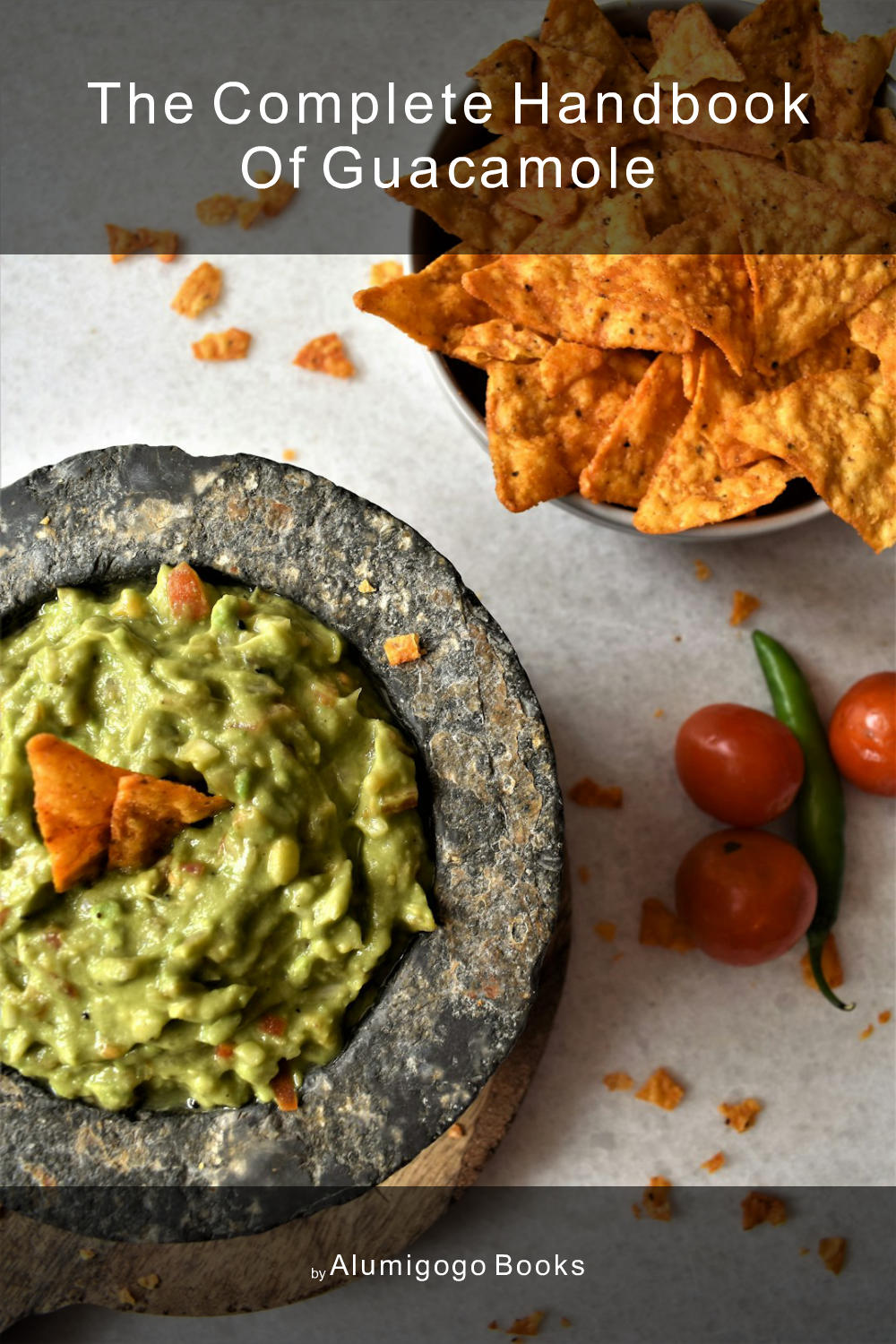
The Complete Handbook of Guacamole
A Professional's Field Guide to Selection, Storage, Service, and Commercial Use
★★★★★4.1 · 8 reviewsby Alumigogo Books
non-fiction
The definitive practical reference for choosing, storing, serving, and profiting from guacamole at professional scale.
🔒Secure checkout via Stripe
Labor Day Sale
$9
About this book
Guacamole sits at the intersection of fresh produce, prepared food, and foodservice logistics. It is one of the few dips with a hard expiration clock, variable raw material quality, and a serious pH-driven safety requirement. Yet most guidance stops at 'use ripe avocados and add lime.' This handbook goes deeper: how to assess avocado maturity in bulk, how acidity and preservatives interact with food safety regulations, what distinguishes a fresh-retail product from a frozen foodservice tub, and how to diagnose texture and color failures with measurable corrections.
Written for professionals rather than marketing to them, the book covers the nine chapters of the entire category: understanding what guacamole actually is and how it works, evaluating types and specifications, choosing the right product for a specific operation, correct handling and service, troubleshooting, the supplier landscape and business opportunities, future trends, and detailed FAQs and glossary. For readers who want to make money in guacamole - whether by private labeling, distribution, or consulting - there is a dedicated chapter on the practical business models available today.
The tone is neutral, concrete, and grounded in food science and industry practice. Charts, tables, and checklists are used where they genuinely help, and every claim is tied to real-world conditions: walk-in coolers at 3°C, hotel pan depths, distributor lead times, and the actual cost of spoilage.
Reader Reviews
Kevin Perez
★★★★★I run a small catering operation and this replaced my entire file of printed spec sheets from three different suppliers. The chapter on choosing the right product was worth the price alone - I now know how to compare a fresh-retail tub against a frozen foodservice product without relying on the sales rep. The troubleshooting guide for textural breakdown has already saved me from a bad batch. Only reason it's not 5 stars for me is that some sections feel written more for industrial scale than my operation - I could have used more depth on the 5 to 50 person catering scenario.
Mary Lopez
★★★★★There's solid information in here, especially the notes on pH and why some store-bought guacamole doesn't brown. But the tone is drier than I expected - it reads more like a textbook than a handbook I'd keep within reach while prepping. Also, the maintenance chapter felt like it was stretching one topic across several pages. If you need a comprehensive reference for commercial use, this is the most complete thing around. But if you're a serious home enthusiast, you'll skim past a lot of it.
Kimberly Young
★★★★★This is the reference I've been waiting for. I'm a food science grad and spent years relying on random manufacturer spec sheets and half-remembered lab protocols when buying guacamole for our restaurant group. This book finally gives me a single source for the actual mechanics - the polyphenol oxidase activity, the brix/acid interaction, the water activity thresholds. The chapter on types and specifications is one of the most precise things I've read outside a peer-reviewed journal. The business opportunities chapter gave me a concrete framework for a private-label line I'd been mulling for two years. I've already recommended it to three other people in procurement.
Daniel Lopez
★★★★★As a grocery buyer I have to deal with a constant stream of vendors pushing their own products, so I appreciated a book that's actually neutral and doesn't have an agenda. The comparison of preservative systems - citric acid vs ascorbic acid vs the proprietary blends - was exactly the kind of practical detail I couldn't find anywhere else. The recipes are implied rather than given, which is fine because that's not what I needed. My one gripe: the storage temperature tables could have been printed on a fold-out card for quick reference instead of buried in the middle of a chapter.
Patricia Nelson
★★★★★Good, practical book. I own a food truck and serve guacamole daily, and the advice on holding temperatures and on how to refresh a batch that's been sitting too long has genuinely improved our product. I also liked the direct comparison of fresh vs frozen - I switched suppliers because of what I read here. The cover and packaging make it look like a dense academic text, but it's actually a very readable field guide. I dock one star only because the future trends chapter felt speculative and less useful than the rest of the book.
Amy Martin
★★★★★The book is well-researched and I can't argue with the accuracy, but I have a hard time picturing who it's really for. I'm a serious hobbyist with a decent setup at home and I found large sections - specifically the distributor and private-label chapters - completely irrelevant to me. The first three chapters were genuinely useful and I've changed how I pick avocados for my parties, but there's maybe 150 pages here that I'll never open again. If this was marketed as 'strictly for heavy commercial use' I'd give it 4 stars. As a complete handbook, it overreaches.
Timothy Roberts
★★★★★Finally, a resource that treats guacamole as the industrial food product it actually is. I'm a consultant who advises restaurant groups on menu engineering and cost control, and the chapter on types and specifications is the most credible treatment of the category I've encountered. The breakdown of how processed guacamole differs from fresh - and the exact criteria to evaluate both - is worth the full price. My only wish is that there was more depth on the frozen supply chain dynamics, but the breakdown of supplier categories gave me several names to research. A necessary reference for anyone serious about this space.
Lisa Roberts
★★★★★I bought this for my husband who manages a large wholesale food distributor and he uses it constantly for training new staff. I eventually read it myself out of curiosity and got sucked in. The explanation of why guacamole goes brown at different rates depending on acid type and avocado variety is the clearest I've read. I also appreciate that it didn't shy away from the business side - the chapter on private labeling actually shows how to think through the costs and risks, not just the upside. There's no fluff and no filler. This is what a reference book should be.