The Complete Handbook of Motor Vehicle Frame & Body Parts
A practical field reference for professionals, businesses, and serious enthusiasts: how to identify, select, repair, and source motor vehicle frames and body panels.
★★★★★4.3 · 7 reviewsby Alumigogo Books
non-fiction
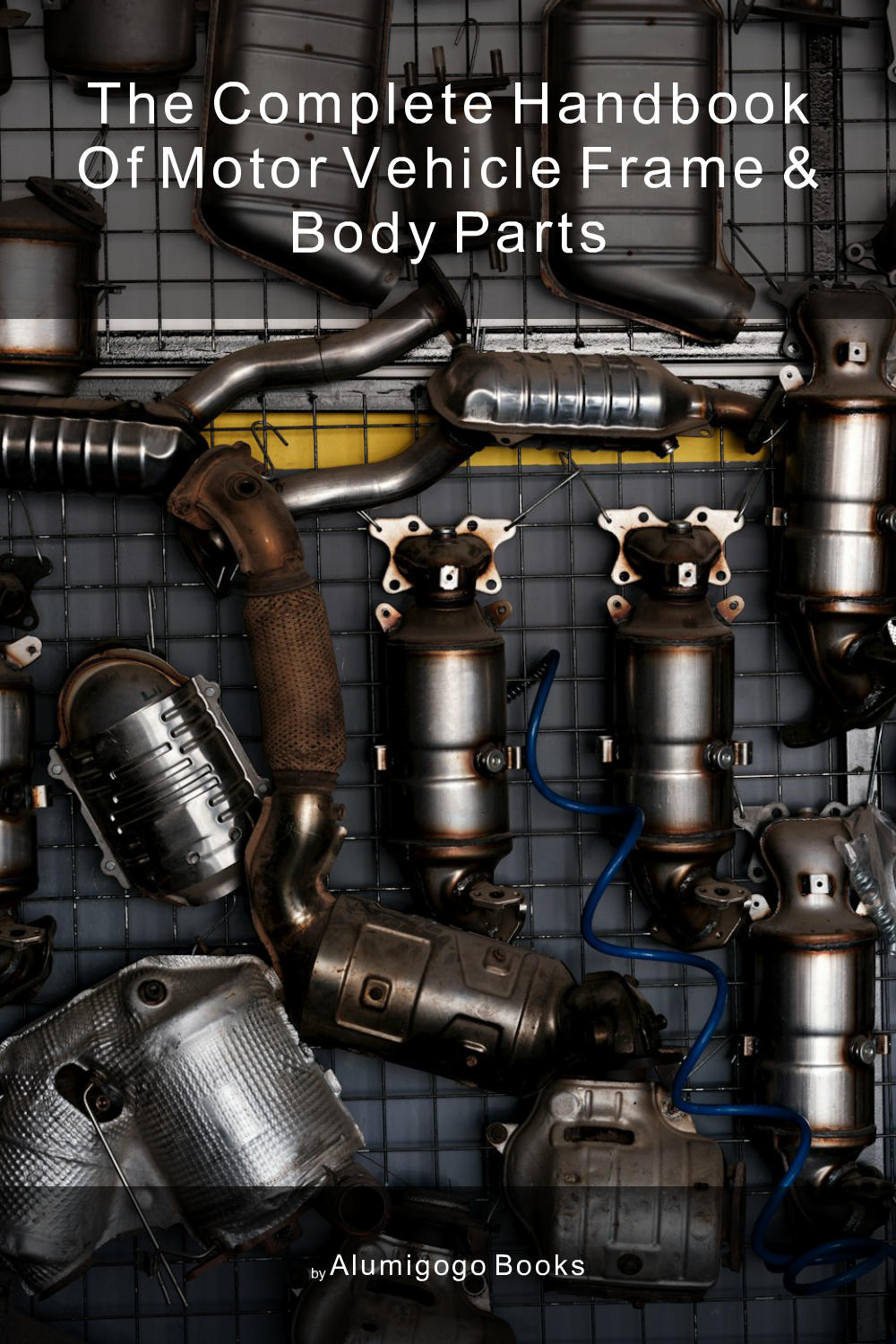
The Complete Handbook of Motor Vehicle Frame & Body Parts
A practical field reference for professionals, businesses, and serious enthusiasts: how to identify, select, repair, and source motor vehicle frames and body panels.
★★★★★4.3 · 7 reviewsby Alumigogo Books
non-fiction
A no-nonsense engineering reference for buying, installing, and repairing motor vehicle frames and body panels. Practical specifics, not product fluff.
🔒Secure checkout via Stripe
Labor Day Sale
$9
About this book
This is a straight-talking reference for anyone who works with motor vehicle structures. It covers the physical reality of frames (from ladder frames on trucks to unibody construction on passenger cars) and body panels (from fenders and hoods to structural aprons and rocker panels). You will learn how steel grade, gauge thickness, and spot weld placement affect crash behavior and repair decisions — not just how to bolt on a new fender, but why the right one matters for alignment, corrosion resistance, and resale value.
The handbook walks you through identifying original equipment (OE) versus aftermarket and certified options, reading and interpreting part numbers and engineering drawings, and choosing the right product for a given repair, budget, and vehicle age. It includes practical installation and welding guidance, a full maintenance and troubleshooting section for common structural failures (rust perforation, weld fatigue, misaligned mounting points), and a chapter on the business side: sourcing, reselling, servicing, and consulting opportunities in the collision and restoration supply chain. The final chapters look ahead to material shifts like aluminum and high-strength steel, and offer a curated list of expert resources for ongoing reference.
Written for professionals and serious hobbyists, this book is not a sales pitch. It is a dense, practical reference designed to be consulted as often as a torque spec chart, and it cites concrete examples of what goes wrong — and how to fix it — at every stage.
Reader Reviews
Sarah Miller
★★★★★I've been running a body shop for two decades and I'm tired of marketing fluff in technical books. This one is different — the chapter on unibody vs. ladder frame was a solid refresher, but the real payoff was the explanation of how metal gauge readings translate to structural integrity. I've already used the terminology for steel grades when talking to my supplier. It reads like a reference, not a brochure, exactly as promised.
Carol Clark
★★★★★As a restoration enthusiast, I felt like I had ten years of forum knowledge condensed into a single book. The first chapter grounded me on why a thicker fender isn't always the better choice, which was a problem I ran into last summer. I appreciated the concrete breakdown of spot weld placement and how it impacts stiffness — a detail I'd never seen spelled out so plainly. It's my new go-to gift for apprentices.
Eric Mitchell
★★★★★I'm a hobbyist who restores older trucks, and I have to say, this book felt a bit dry for my purposes. The first chapter is informative, but it focuses heavily on structural crash behavior and safety engineering, which isn't my main concern. I learned some things about frame rigidity, but I was hoping for more practical 'how to' on body work. It's well written, just not exactly what I expected for the price.
Patricia Rodriguez
★★★★★I'm a fleet service coordinator, so I'm always justifying parts purchases to our finance manager. The chapter on specifications gave me the language I needed to argue why we need certain steel grades and why a cheap aftermarket quarter panel isn't worth it for our service vans. My only minor gripe is I wish the 'business opportunities' chapter had more on fleet-specific contracts. Still, very useful for daily decisions.
Amy Martinez
★★★★★There's good information here, and I like that it's serious without being overly complicated. However, the first chapter felt like it could have been shorter, and I found myself flipping ahead to the practical installation stuff. I was also disappointed there weren't more photos or diagrams — a handbook like this could really benefit from visual aids showing a rusted mount vs. a clean one. It's a good reference overall, but not the perfect guide for me.
Joseph Scott
★★★★★This is the textbook we should have had in vocational school. The first chapter nails the reality of how a front-end collision transfers load through the frame rails to the floor pan — a concept that's hard to visualize but absolutely critical for insurance repair estimates. I specifically appreciated how it discusses corrosion as a structural hazard, not just a cosmetic one. I've placed this next to my torque charts for good.
Kimberly Hall
★★★★★Finally, a reference that treats the buyer like a professional. The premise is exactly right: a frame is a structural component, not just a part, and this book explains how the metallurgy of a simple L-shaped control arm bracket can dictate repair strategy. I read the first chapter, then immediately used the principles to assess a customer's wrecked SUV. Highly recommended for any serious technician.