The Complete Handbook of Power Amplifiers
Selection, Installation, and Service for Professionals and Serious Enthusiasts
★★★★★4.0 · 8 reviewsby Alumigogo Books
non-fiction
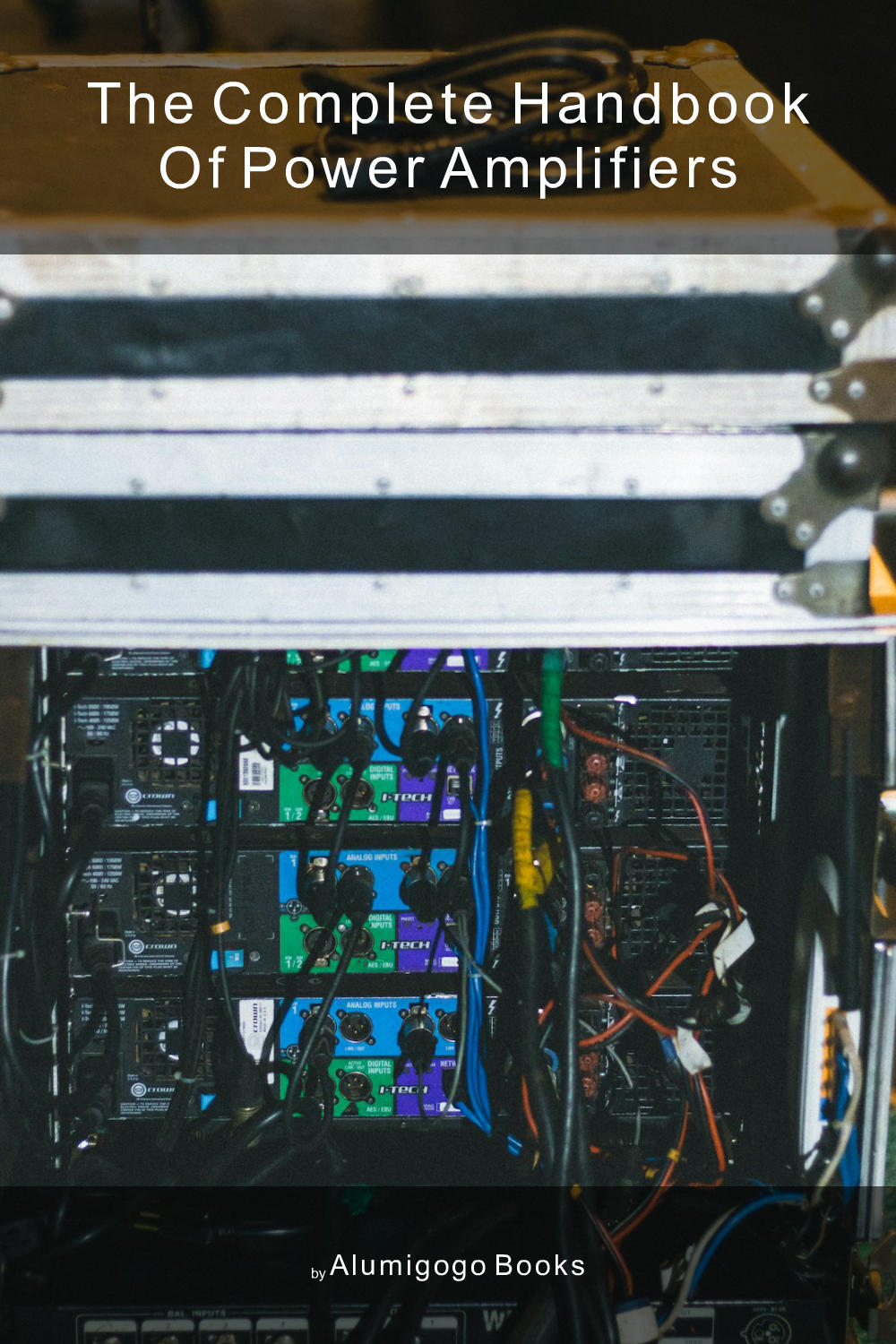
The Complete Handbook of Power Amplifiers
Selection, Installation, and Service for Professionals and Serious Enthusiasts
★★★★★4.0 · 8 reviewsby Alumigogo Books
non-fiction
Cut through the specs and marketing. A field-tested reference for choosing, installing, and fixing power amplifiers that perform reliably.
🔒Secure checkout via Stripe
Labor Day Sale
$9
About this book
Every power amplifier claims high wattage and low distortion, but the reality of continuous operation, thermal stress, and real loudspeaker loads is where the actual engineering decisions are made. This handbook is written for the people who have to make those decisions under time pressure—touring engineers before a show, system integrators on a deadline, and studio owners protecting valuable loudspeakers. It explains what happens inside the amplifier, from the input stage to the output devices, and translates that into practical guidance you can use today.
The first half of the book covers the core concepts and specifications, teaching you how to read a datasheet like a professional. You will learn why damping factor matters less than you think, how to calculate the real continuous power requirement for a gig rather than a sales sheet, and why some amplifiers fail in the first year while others last two decades. The second half is a practical field manual: proper gain staging, wiring and grounding, thermal management, routine maintenance, and a structured approach to troubleshooting the most common faults.
For those looking to turn this knowledge into income, the book also covers the business landscape—what to look for in a service niche, the realities of rental fleets, and how to position a repair or consulting practice. It concludes with a look at emerging technology and a glossary of terms that serve as a quick reference in the field. This is not an advertisement for any brand; it is a professional’s working manual.
Reader Reviews
Kathleen Baker
★★★★★It’s a solid, mostly practical reference, and I’ve used the gain staging section already. But I felt the chapter on brands was too polite—everyone knows some manufacturers have poor QC, and the future trends chapter felt a bit like reading a tech blog from two years ago. Also, I wish the troubleshooting section had more photos. Fine as a desk reference, but I didn't learn as much as I'd hoped.
Daniel Green
★★★★★I’ve been running sound for 15 years, so a lot of this was review, but it was nice to see it in one place. The chapter on matching amps to loudspeakers is good for the younger engineers I supervise. My main knock is that it’s a bit dry, and sometimes I think it gets too deep into the weeds on stuff like slew rate that most of us will never care about. Keep it on the shelf, but it’s not the only book you'll need.
Edward Robinson
★★★★★Finally, an audio book that treats me like a professional and not a consumer. I am a system integrator, and I got my money's worth from the installation chapter alone—the bit on gain structure and input sensitivity saved me a trip back to a job site. The author actually explains the why, not just the what. I've already ordered two more copies for my technicians.
Rebecca Hall
★★★★★It’s decent and I appreciate that it doesn't push any one brand. The calculations for SPL and power requirements are useful, but I found the tone to be a little condescending in a few spots, like when it explains what AC power is. Also, the print quality on my copy is a bit meh, but that might not be the author's fault. It's a good handbook, just not the definitive one I was expecting.
Margaret Sanchez
★★★★★I bought this for our house of worship's sound team, and it has paid for itself many times over. Our lead tech has been running sound for decades, and even he said the section on thermal management and rack cooling made him rethink our layout. The maintenance schedule in chapter 5 is now printed and hanging in our equipment room. It's very readable for people like me who are volunteers and not electrical engineers. Highly recommend it.
Barbara Taylor
★★★★★As a studio owner, I was a bit worried this would be all about live sound and touring. It does cover that, but the core electrical principles and spec interpretations apply just as much to my studio monitors and headphone amps. The only real downside is that I was hoping for a more extensive buying guide in the brand section; it’s more of an overview. Still, it's a great reference, and I keep it handy when I'm talking to my repair tech.
Eric Perez
★★★★★This is the real deal. The author clearly understands what actually goes wrong with these devices in the field. The troubleshooting section is worth the price of admission—I fixed a buzzing amp on a monitor wedge that was a grounding issue in the mixing desk, not actually the amp, thanks to the systematic approach they teach in chapter 5. The glossary is also better than anything I've seen online. I'm buying a copy for everyone on my crew.
Ronald Robinson
★★★★★It’s a well-written and comprehensive technical manual. I appreciated the clear language around Class-D amps and switching power supplies, which are often just magic to me. The chapter on future trends left me with more questions than answers, but that's almost the nature of the topic. I knocked off a star because the binding on my paperback is already cracking after a few months of moderate use, which is ironic for a handbook that is meant to be used in the field.