The Complete Handbook of Table Legs
A Practical Reference for Furniture Makers, Restorers, and Specifiers
★★★★★4.3 · 6 reviewsby Alumigogo Books
non-fiction
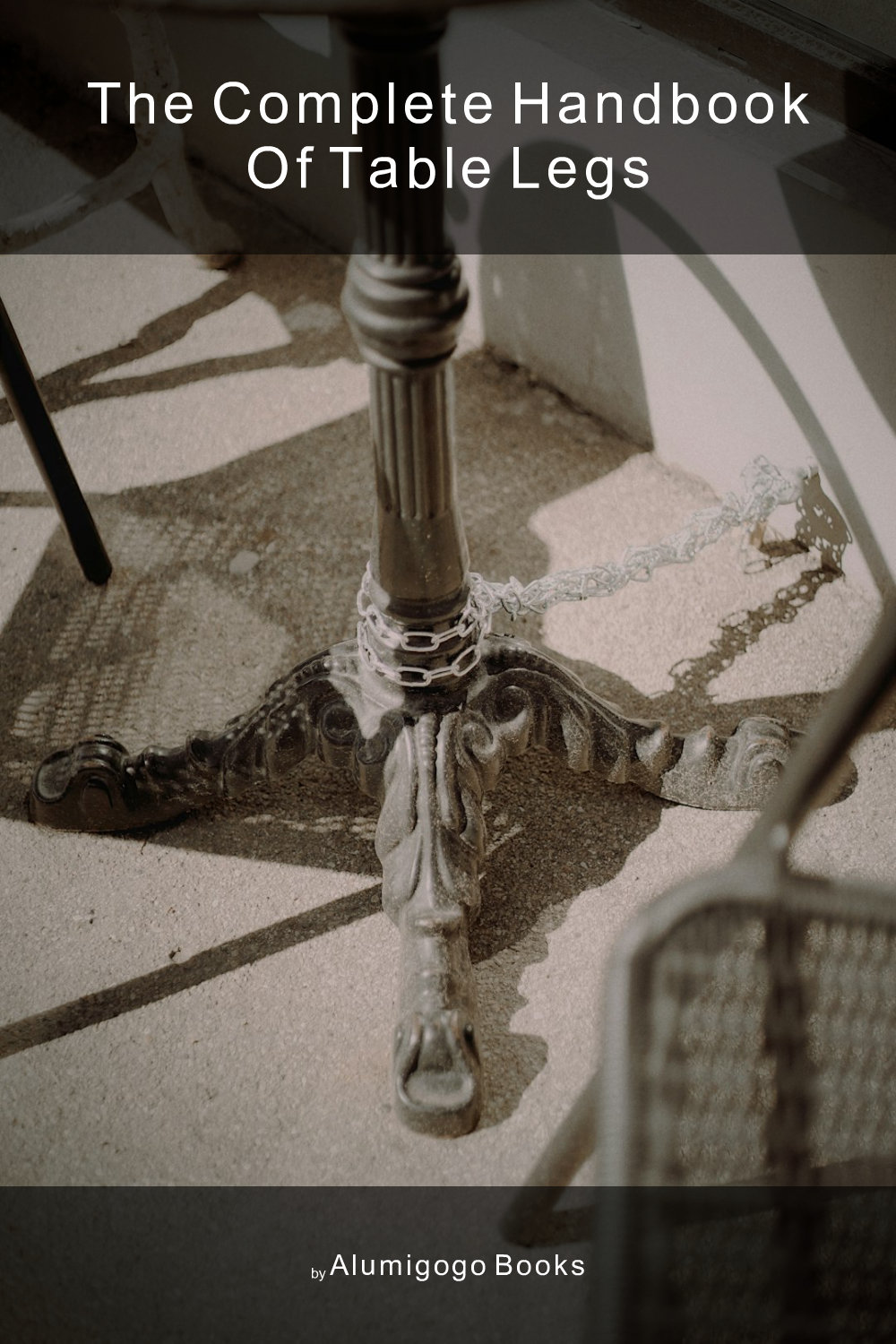
The Complete Handbook of Table Legs
A Practical Reference for Furniture Makers, Restorers, and Specifiers
★★★★★4.3 · 6 reviewsby Alumigogo Books
non-fiction
The complete reference for table legs: types, loading, installation, maintenance, and the business of making and selling them.
🔒Secure checkout via Stripe
Labor Day Sale
$9
About this book
You do not need another inspiration book of pretty furniture photos. You need answers. How much weight can a 3-inch steel angle leg actually carry? Why does a solid oak leg split after two winters in a heated room? What is the difference between a manufacturer's 'commercial grade' and 'contract grade' designation? This handbook answers those questions with numbers, diagrams, and field-tested procedures.
The opening chapter defines what a table leg is mechanically—a compression member with specific load paths, fastener requirements, and stability constraints—and explains why a leg that works for a coffee table may fail catastrophically on a 12-person conference table. Subsequent chapters provide a systematic breakdown of leg types (straight, turned, tapered, splayed, X-frame, pedestal, and industrial styles), the material grades that actually matter, and the dimensional standards you must know when mixing legs with table aprons, rails, and tops.
For the professional, the handbook covers installation techniques for wood, metal, and composite structures; troubleshooting for wobble, racking, and joint failure; and a full chapter on the business landscape—wholesaling, private-labeling, and servicing the contract furniture market. The final chapters look at emerging trends like adjustable-height legs, hollow steel extrusions with integral cable management, and new certification requirements for commercial furniture.
Reader Reviews
James Jackson
★★★★★I've been building furniture for 22 years and I still learned things in Chapter 1 that I'd never seen spelled out—specifically the explanation of how a leg's load path changes when you add an apron. The load tables and the section on why a 3/8-inch bolt is usually overkill (but sometimes not) are worth the price alone. This is the reference I wish I'd had when I started my shop.
Andrew Nguyen
★★★★★Decent information overall, but I found the tone a bit dry even for a reference book. The chapter on installation is solid and I appreciate the specific torque values, but I was hoping for more on decorative turned legs and custom wood species. The business chapter felt skimpy too—it lists opportunities but doesn't go deep on pricing strategies. It's a useful book, but not the complete bible the subtitle suggests.
Eric Roberts
★★★★★Good practical coverage without the usual filler. I specifically needed to know if hairpin legs could handle a live-edge oak top for a client—the load tables in the types chapter gave me a clear answer (no, not without a center support). The troubleshooting chapter on wobble from uneven floors is exactly what I deal with weekly. Only complaint: the photos are sparse, and I'd have liked more visuals of installation jigs.
Michael Walker
★★★★★I'm an industrial designer who specifies furniture for office projects. The chapter on contract-grade certifications and the differences between commercial and residential leg construction saved me from a costly mistake on a spec I was writing. The glossary is genuinely useful for my junior staff. It's not a sexy book—it's a working book, which is exactly what I wanted. A bit more on integrated cable management would have pushed it to five stars.
Timothy Wright
★★★★★As a hobbyist who's moved past beginner projects, this is the book that fills the gaps. The explanation of racking forces and why an X-frame needs a center tie rod finally made the engineering click for me. I built a maple trestle table using the joinery guidance in the installation chapter and it's rock solid. The maintenance section on seasonal wood movement is the kind of specific, experienced advice you don't get from YouTube.
Stephanie Gonzalez
★★★★★I run a small furniture restoration business and this has become the go-to reference on my bench. The chapter on material grades is practical—I can now tell a client with confidence that a 'solid brass' leg on their 1970s table is actually brass-plated steel, and I know exactly how to verify it. The troubleshooting guide for wood splitting at the joint saved one of my weekend repair jobs. I've already bought a second copy to keep at the shop.