The Complete Handbook of Watch Accessories
A Professional's Field Guide to Buying, Using, and Maintaining Watch Accessories
★★★★★4.0 · 3 reviewsby Alumigogo Books
non-fiction
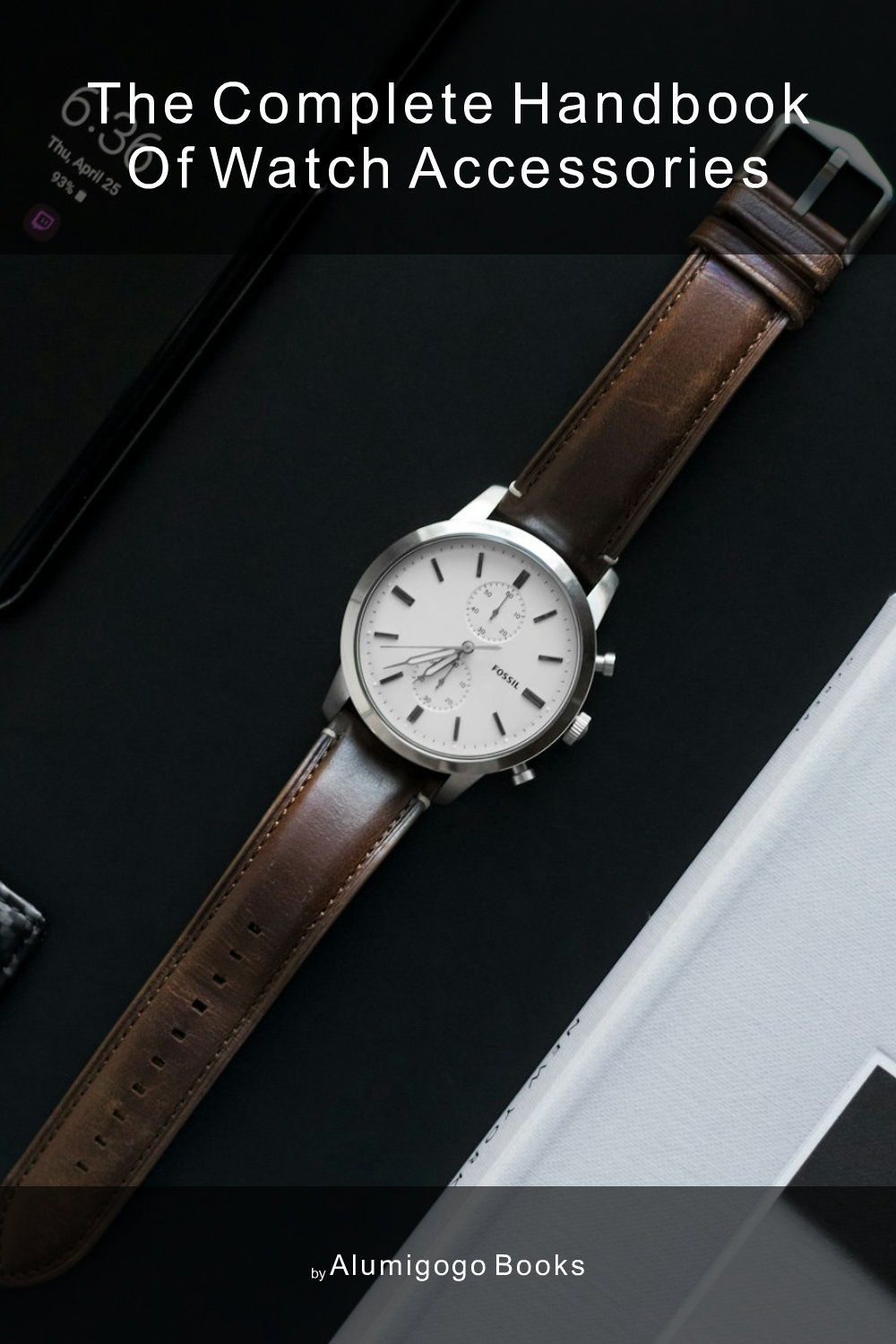
The Complete Handbook of Watch Accessories
A Professional's Field Guide to Buying, Using, and Maintaining Watch Accessories
★★★★★4.0 · 3 reviewsby Alumigogo Books
non-fiction
A neutral, technical reference for buying, installing, and maintaining every watch accessory you sell, service, or own.
🔒Secure checkout via Stripe
Labor Day Sale
$9
About this book
From the spring bar that breaks at 35,000 feet to the leather strap that cracks after six months, most problems with watch accessories are predictable and preventable. This handbook turns 30 years of trade knowledge into a single, organized reference. It covers the full spectrum of accessories: straps (leather, rubber, fabric, metal), bracelets, deployant clasps, spring bars, watch winders, storage cases, cleaning tools, and sizing kits. You will learn how to read a specification sheet, measure lug width correctly, and match a strap's thickness and curvature to the watch case.
The book is written for professionals and serious users. It avoids brand preference and stylistic taste and sticks to verifiable standards: material composition, hardness ratings, water resistance implications, fastener types, and tool specifications. If you are a jeweler building an accessories inventory, a watchmaker installing a custom strap, or a collector who wants to maintain a vintage piece, this book provides the exact operational knowledge required. It even includes a chapter on the business side—reselling, private-labeling, and servicing—for those who want to turn this knowledge into revenue.
Finally, the book looks forward to material innovations like recycled marine plastics, anti-microbial coatings, and standardized quick-release mechanisms. It also provides a practical glossary so you can decode the jargon on product pages and in supplier contracts. This is not a lifestyle book; it is a toolkit for the trade.
Reader Reviews
Sharon Green
★★★★★This is a genuinely useful reference, not another listicle. The chapter on materials saved me from stocking a run of cheap 'leather' straps that the spec sheet would have revealed as bonded. My only gripe is the writing style, it's a bit dry, but that's expected for a serious manual. I've already recommended it to my store manager. It's not a pleasure read, but it's a good working tool.
Laura Hall
★★★★★Parts of this are excellent, especially the breakdown of deployant clasps and the maintenance tables. But I wish it went deeper on the business side; chapter six felt like a starting point rather than a full guide. I also think the winder TPD information is a little conservative for certain high-torque models. It's worth the money if you're starting out, but I didn't learn a ton that I hadn't already figured out in the field. Solid but not exceptional.
Mary Adams
★★★★★Finally, a reference that treats me like a professional. I am a watchmaker with 15 years in the repair trade, and the spring bar spec section alone is worth the cover price. The section on installing curved-spring straps with complex lugs was exactly right. I have started using it as a training manual for my new apprentice. It answered several questions I never knew to ask, particularly about the tensile strength ratings of quick-release vs. standard pins. I will be keeping a copy on the bench at all times.